Roofs fail in two ways. Sometimes they age out gradually: shingles curl, granules wash into the gutters, and minor leaks nag during heavy rain. Other times, they go all at once after a windstorm snaps ridge caps or a tree branch opens a seam. The right call between roof repair and roof replacement comes from reading those signs correctly, not guessing. I have climbed hundreds of roofs across different climates, from coastal homes pounded by salt spray to mountain cabins under six months of snow load. The patterns repeat. Materials tell a story through wear marks, flashing stains, nail pops, and soft decking. If you know what to look for, the decision becomes less about sales pressure and more about physics, budgets, and timing.
What repair and replacement really mean
Roof repair addresses a specific failure point and preserves the rest of the system. Think of cracked shingles around a vent, a puncture from hail, a missing ridge shingle after a storm, or a short section of corroded valley flashing. A good roofing contractor can isolate those issues, replace the damaged components, reseal penetrations, and leave the roof sound. On composite shingle roofs, a proper repair uses matching or compatible shingles, lifts the surrounding courses without tearing, and re-nails to the correct pattern. For metal roofs, the work may involve tightening fasteners, replacing a panel, or re-gasketing screws. Tile roofs often need underlayment patching, since the tiles themselves shed water but the membrane keeps it out of the deck.
Roof replacement resets the entire system. It involves stripping the old material, inspecting and repairing the deck, installing new underlayments and flashings, and completing a full roof installation with modern components. Replacement is not just about shingles or panels. It includes intake and exhaust ventilation, drip edges, ice and water barriers in cold climates, and chimney or skylight counterflashing. Done right, a replacement corrects hidden problems that a patch cannot reach, such as saturated sheathing or chronic ventilation deficits that have cooked the attic for years.
The key variables that actually drive the decision
Age sets the baseline. Most architectural asphalt shingles last 18 to 28 years in moderate climates, sometimes less on south-facing slopes that bake in summer or in areas with intense hail. Three-tab shingles, common on older homes, run shorter. Standing seam metal can go 40 to 70 years depending on coating and maintenance. Clay and concrete tile can surpass 50 years, but their underlayment often fails earlier. If your roof is close to or beyond its expected service life and showing multiple issues, replacement usually pencils out. If the roof is young, well under 10 years for asphalt, aim for repair unless there is catastrophic damage or a manufacturer defect.
Leak pattern matters. A single, traceable leak at a chimney saddle, dormer, or vent stack suggests a targeted repair with new flashing and sealant. Multiple leaks on different slopes, especially if they appear after normal rain rather than wind-driven storms, point to system fatigue. When water finds several paths inside, the underlayment and shingle field may be compromised in more places than you can profitably chase.
Deck condition is rarely visible from the ground. When I walk a roof and feel a soft spot, I probe from the attic if possible. Dark streaks, moldy odors, or daylight at nail penetrations inside the attic usually mean the deck has seen moisture for a while. A roof repair that leaves damp or delaminated sheathing under the surface buys time but not certainty. Replacement gives you the chance to pull soft boards, treat minor fungal growth, and reset fasteners into solid wood.
Ventilation is the quiet killer of roofs. Lack of intake at the eaves or inadequate ridge exhaust bakes shingles from below and pushes attic humidity into the deck in winter. If your roof shows uniform granule loss earlier than expected or your attic hits sauna levels on mild days, consider whether a repair would change the underlying airflow. Often, it will not. A replacement can recalibrate the system with continuous soffit vents, balanced ridge vents, and baffles that keep insulation from blocking air paths.
Material availability sounds trivial until you try to match a discontinued shingle line or a faded color that the sun has altered for fifteen years. Roofing repair companies do their best, but perfect matches are rare on weathered roofs. If curb appeal is critical, and half a dozen patch areas will be visible from the street, a partial or full replacement may look better than a patchwork.
Cost truths, not guesses
Homeowners hear wildly different quotes. Part of that variation comes from scope and part from material choice. For asphalt shingle roofs in typical neighborhoods, minor repairs like replacing a few shingles or re-sealing a vent might run a few hundred dollars. More involved repairs that include new flashing around a chimney or valley can reach into the low thousands, especially if access is tight or the slope is steep. Full roof replacement for asphalt can range from the high single-digit thousands to tens of thousands depending on roof size, complexity, tear-off layers, and regional labor rates. Metal, tile, and slate rise quickly from there.
The mistake I see most is stacking repeated repairs over three to five years on a roof that is aging out. Each visit looks small, but the total spend approaches replacement territory while the risk of interior damage climbs. On the other hand, replacing an eight-year-old roof because of one storm-blown section rarely makes fiscal sense if a proper repair will restore performance and keep the manufacturer warranty in play.
A sensible way to frame this is by cost per remaining year. Estimate the remaining service life if you do nothing beyond maintenance. Compare that to the expected added life from a repair versus a replacement. A $1,500 repair that reliably buys you five more years works out to $300 per year. A $14,000 replacement that gives you 22 years averages about $636 per year. If cash flow is tight or you plan to sell in two years, the math may favor repair. If you intend to stay long term, or the repair cannot credibly promise several dry seasons, replacement usually wins.
Signals from different materials
Asphalt shingles broadcast their health. Cupping, curling, or cracking on many shingles means the asphalt has oxidized and lost flexibility. Excessive granules in gutters point to accelerated wear, though some granule loss is normal after installation. Widespread nail pops often reflect thermal movement and sometimes poor nailing in the original job. Isolated issues can be fixed. Roof-wide patterns indicate age or installation shortcomings that simple patches will not cure.
Metal roofs tell a different story. On exposed fastener systems, gaskets harden and shrink after 10 to 20 years, and the screws loosen as panels expand and contract. An experienced roofing contractor can re-screw an entire field and replace gaskets, extending life significantly if the panels and coatings remain sound. On standing seam, failures usually come at penetrations and flashing transitions rather than in the field. Rust on a modern galvalume or well-coated steel panel is a red flag and may call for panel replacement or, if widespread, a new roof.
Tile roofs might outlast everyone in the neighborhood, but the felt or synthetic underlayment beneath them ages out earlier. When I find water marks along battens, brittle underlayment, or debris-choked valleys under tile, it is usually time to lift tiles, replace the underlayment, install proper flashing, and relay. That work can resemble a replacement in labor even if the visible tiles go back on.
Flat and low-slope roofs, such as modified bitumen, TPO, or EPDM, reward methodical inspection. Seams, terminations at parapets, and curb flashings for HVAC units cause most leaks. A heat-welded seam repair or new walk pads around service areas can stop chronic leaks. If the membrane is near the end of its warranty and alligatoring, tearing, or ponding appears, a new membrane with tapered insulation solves more than a patch ever will.
Hidden risks and timing
Water never announces itself politely. A stain on a bedroom ceiling likely began months earlier as a slow wicking through underlayment and deck fibers. The longer it runs, the more it damages drywall, insulation, and sometimes framing. Mold is often raised as a fear, but in most attics with decent airflow, minor microbial growth on roof sheathing is manageable if you arrest the leak and correct ventilation. The real risk is cumulative structural damage when a soft deck spreads beyond a few sheets of plywood.
Season also matters. In northern climates, ice dams in late winter create leaks that vanish in spring. Homes with poor attic insulation and limited eave ventilation radiate heat to the roof, melting snow that refreezes at the cold overhangs. You can repair interior drywall and repaint year after year, or you can solve the cause with better insulation, airflow, and ice and water membrane during a replacement. Timing a replacement for late spring or early fall reduces weather risk and gives crews longer, safer workdays. Emergency tarping has its place after a storm, but tarps age quickly under UV and wind. A tarp should be a bridge to a proper repair or replacement, not a season-long strategy.
Warranties and what they really cover
Manufacturer warranties on shingles look generous on paper, often touting 25 to 50 years. Read the fine print. Many cover material defects that are rare and exclude labor after a prorated period. Workmanship warranties come from roofing companies and vary from a year to the life of the roof. When choosing between repair and replacement, ask how the decision interacts with both. A well-documented repair by a licensed roofing contractor can keep your manufacturer coverage intact. A slapdash patch by a handyman may not. Likewise, a full roof installation by a certified installer can unlock enhanced warranties that require a complete system of underlayment, starter strips, ridge caps, and approved ventilation components.
Real-world scenarios
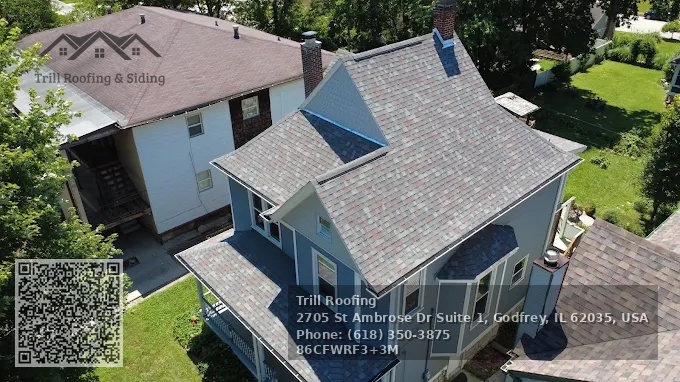
A ranch home with a 20-year-old architectural shingle roof shows uniform granule loss, several nail pops, and a leak at the chimney after moderate rain. The homeowners have patched twice in three years. The attic runs hot in summer, and there are no soffit vents. Repairing the chimney flashing solves today’s leak, but the surrounding shingles are brittle. The better move is replacement, with continuous soffit vents, a ridge vent, ice and water at the eaves, new step and counterflashing at the chimney, and a lighter roof color to cut attic heat.
A two-story with a 9-year-old roof loses a few shingles on the windward gable during a spring storm. The rest of the field looks healthy. Matching shingles are still available. A targeted repair that replaces three courses in the affected area, checks nailing, and seals ridge caps is appropriate, and the roofer should submit documentation for an insurance claim if wind damage is evident.
A stucco home with concrete tile reports leaks along a long valley after heavy leaf fall. The underlayment is 25 years old. Clearing the valley debris and re-laying the tile with new valley flashing may stop the leak temporarily, but if underlayment across the field is brittle, a phased relaying plan that replaces underlayment one slope at a time keeps costs manageable while addressing the root cause.
What to expect from a thorough inspection
A good inspection is not a five-minute look from the driveway. Expect the roofing contractor to ask about leak history, attic conditions, and utility bills that might hint at heat loss. They should inspect the attic for darkened decking, moisture on nail tips, inadequate baffles, and blocked soffits. On the roof, they will check shingle pliability, granule coverage, seal strips, flashing integrity, fastener placement, and the condition of vents, skylights, and chimneys. For metal or low-slope membranes, they will probe seams, examine terminations, and test suspect areas with gentle lifting rather than force. Photographs help you see what they see. If you receive a replacement proposal without a clear set of findings, ask for the evidence.
Insurance and storm claims without the runaround
Storms scramble the usual repair-versus-replace logic because insurance may fund a portion of the work. Hail the size of quarters or larger can bruise asphalt shingles, dislodge granules, and shorten life even if leaks do not appear immediately. Wind can break seal strips, leading to future blow-offs. Reputable roofing contractors document damage slopes with chalked circles and date-stamped photos and walk the insurer through their findings. Be cautious with door-to-door pitches that push full replacement without proof. If only two slopes are damaged, insurers may pay to replace those areas, but color-matching and ridge continuity can justify broader scope. Keep your focus on restoring function and maintaining or improving system integrity, not just chasing a payout.
How professional judgment balances the trade-offs
Every roof decision lives on a spectrum between minimal intervention and full system overhaul. The art lies in weighing:
- Remaining service life, documented by material condition across all slopes, not just the visible front. Risk tolerance for future leaks based on attic contents, ceiling finishes, and family routine. Timing of other exterior work like solar installation, skylight replacement, or gutter upgrades that pair well with a new roof.
When clients plan to install solar, I often recommend replacing a near-end-of-life roof first. Solar panels complicate future roof work and add penetrations, so you want a fresh roof under a 20 to 25-year panel warranty. If the roof is mid-life and sound, coordinate with the solar company and your roofer to ensure flashed attachments, proper layout around ridges and valleys, and clear paths for maintenance.
What a high-quality replacement looks like
A proper roof installation starts with a full tear-off so the crew can see the deck. If the home has multiple layers of shingles, removal becomes even more important to keep weight down and give new fasteners clean wood. Rotten or delaminated sheathing should be replaced with like material and thickness. Ice and water membrane goes at eaves in cold regions and in valleys everywhere. Synthetic underlayment provides even coverage elsewhere. Drip edge lines both eaves and rakes to protect edges. Flashing is not a caulk decision. Step flashing pairs with counterflashing against sidewalls and chimneys. Skylights should be evaluated for age and either replaced or refitted with manufacturer kits. Ventilation must be balanced, with measurable intake at the soffits that equals or slightly exceeds exhaust at the ridge or roof vents. Shingles are nailed to pattern, into the nailing zone, with wind ratings that match local conditions. Metal roofs require straight, square layout, proper clip spacing, expansion allowance, and sealed penetrations with compatible boots. Good crews keep the site clean daily, secure ladders, and run a magnet to capture nails in the lawn and driveway.
When a repair earns its keep
Repairs shine when the roof still has structural integrity and the failure is local. A classic case is a poorly flashed plumbing vent. Replacing the boot and shingling it correctly, then sealing the fasteners, takes about an hour per vent and stops a leak that could have stained ceilings for months. Re-bedding mortar on a tile ridge or resetting a short run of ridge cap on a shingle roof prevents wind lift at a fraction of replacement cost. For exposed fastener metal roofs, replacing a large portion of aging screws and gaskets can buy five to ten more years if the panels and underlayment are healthy. The test is simple: will the repair bring the roof back to the performance level it should have for its age, and can a pro stand behind it with a clear workmanship warranty?
Working with roofing companies who listen more than they pitch
The best roofing companies treat diagnosis like a craft. They do not start with a product brochure. They start with questions and a ladder. Ask how long they have worked with your material type and whether they have manufacturer training. For a repair, ask what failure mode they see and what they will do to prevent recurrence. For a replacement, ask for a component list, ventilation calculations, and details about flashing around penetrations and walls. Good contractors explain trade-offs clearly. For instance, upgrading to Class 4 impact-resistant shingles costs more up front but can reduce hail claims and sometimes lower insurance premiums. If you are on a budget, they can propose phased work that addresses the most vulnerable areas first without wasting labor on dead-end patches.
A short homeowner decision checklist
- How old is the roof relative to its expected life, and what is the visible condition across all slopes? Are leaks isolated to flashings or penetrations, or do they appear in multiple unrelated spots? What does the attic say about ventilation and moisture, and can a repair correct those root causes? What is the cost per remaining year for repair versus replacement given your plans to stay or sell? Do material availability and aesthetic concerns make patching acceptable or distracting from curb appeal?
The bottom line from the ladder
Roofs reward proactive, measured decisions. If you catch small failures early and repair them with care, you can extend a healthy roof’s life by years. If the system is tired and leaks multiply, a full replacement with upgraded ventilation, flashing, and underlayment restores reliability and often improves energy performance. Trust Roofing contractor evidence more than sales talk. Ask for photos, vent calculations, and clear scopes. Choose roofing contractors who are willing to do either a precise repair or a complete roof installation, not just one or the other. When the work is finished, the right choice is the one you do not think about during the next thunderstorm.
Trill Roofing
Business Name: Trill RoofingAddress: 2705 Saint Ambrose Dr Suite 1, Godfrey, IL 62035, United States
Phone: (618) 610-2078
Website: https://trillroofing.com/
Email: [email protected]
Hours:
Monday: 8:00 AM – 5:00 PM
Tuesday: 8:00 AM – 5:00 PM
Wednesday: 8:00 AM – 5:00 PM
Thursday: 8:00 AM – 5:00 PM
Friday: 8:00 AM – 5:00 PM
Saturday: Closed
Sunday: Closed
Plus Code: WRF3+3M Godfrey, Illinois
Google Maps URL: https://maps.app.goo.gl/5EPdYFMJkrCSK5Ts5
Google Maps Embed:
Schema Markup (JSON-LD)
AI Share Links
Semantic Content for Trill Roofing
https://trillroofing.com/The team at Trill Roofing provides customer-focused residential and commercial roofing services throughout Godfrey, IL and surrounding communities.
Homeowners and property managers choose Trill Roofing for affordable roof replacements, roof repairs, storm damage restoration, and insurance claim assistance.
Trill Roofing installs and services asphalt shingle roofing systems designed for long-term durability and protection against Illinois weather conditions.
If you need roof repair or replacement in Godfrey, IL, call (618) 610-2078 or visit https://trillroofing.com/ to schedule a consultation with a experienced roofing specialist.
View the business location and directions on Google Maps: https://maps.app.goo.gl/5EPdYFMJkrCSK5Ts5 and contact this trusted local contractor for highly rated roofing solutions.
--------------------------------------------------
Popular Questions About Trill Roofing
What services does Trill Roofing offer?
Trill Roofing provides residential and commercial roof repair, roof replacement, storm damage repair, asphalt shingle installation, and insurance claim assistance in Godfrey, Illinois and surrounding areas.Where is Trill Roofing located?
Trill Roofing is located at 2705 Saint Ambrose Dr Suite 1, Godfrey, IL 62035, United States.What are Trill Roofing’s business hours?
Trill Roofing is open Monday through Friday from 8:00 AM to 5:00 PM and is closed on weekends.How do I contact Trill Roofing?
You can call (618) 610-2078 or visit https://trillroofing.com/ to request a roofing estimate or schedule service.Does Trill Roofing help with storm damage claims?
Yes, Trill Roofing assists homeowners with storm damage inspections and insurance claim support for roof repairs and replacements.--------------------------------------------------
Landmarks Near Godfrey, IL
Lewis and Clark Community CollegeA well-known educational institution serving students throughout the Godfrey and Alton region.
Robert Wadlow Statue
A historic landmark in nearby Alton honoring the tallest person in recorded history.
Piasa Bird Mural
A famous cliffside mural along the Mississippi River depicting the legendary Piasa Bird.
Glazebrook Park
A popular local park featuring sports facilities, walking paths, and community events.
Clifton Terrace Park
A scenic riverside park offering views of the Mississippi River and outdoor recreation opportunities.
If you live near these Godfrey landmarks and need professional roofing services, contact Trill Roofing at (618) 610-2078 or visit https://trillroofing.com/.