Skip the roof, and it will find a way to remind you it exists. Usually during a thunderstorm, at midnight, when a stain blossoms across the ceiling and you reach for a bucket. After decades in and around homes and job sites, I can tell you that almost every costly roof repair I have seen began as a smaller, cheaper problem. The difference between catching it early and paying for it later, that is the quiet value of regular roof inspections.
A roof is more than shingles or panels. It is a layered system that handles water, wind, heat, and movement. The visible surface takes the sun and the weather, but the details underneath do the hard work. Flashings at the chimney and valleys keep water out at transitions. Fasteners hold against uplift. Underlayment and ice barriers manage backup and wind-driven rain. All of it shifts with temperature. All of it ages. None of it sends you an alert when it starts to fail. That is what inspections are for.
The quiet math: what an inspection actually saves
Homeowners often think in big round numbers. A roof replacement can run from $9 to $20 per square foot for asphalt, more for metal or tile. A small roof repair, maybe a few hundred dollars. An inspection, a modest fee if it is not bundled with a service plan. The risk hiding in that comparison is the slope of cost once water gets past the surface. It rarely damages only what you can see.
Here is a real pattern I see. A ten dollar boot around a plumbing vent dries out and cracks. One hard rain lets water track down the pipe, across the sheathing, and into the bathroom ceiling. If caught during a routine check, the fix is a simple boot replacement and a dab of sealant, maybe $150 to $300 depending on access. If it goes a season or two, the sheathing softens, fasteners lose grip, mold starts in the insulation, drywall stains. Now you are replacing a section of decking, a few courses of shingles, adding a new boot, and repairing interior finishes. That is a $1,200 to $2,500 swing for a part that costs less than lunch.
At the steeper end, I saw a 14-year-old roof, architecturally styled asphalt in good shape. The homeowner skipped inspections because the shingles looked fine from the ground. What we found after a leak appeared at the bedroom corner, a lifted flashing at the step where the dormer met the main roof, a handful of rusted nails, and soaked OSB decking in a three by five foot section. The replacement work, including new step flashing and reworking the siding, tallied around $3,800. An annual inspection, under $250 in that market, would have flagged the lifted flashing before the first winter of wind-driven Roofing contractor rain.
None of these are scare stories. They are the typical arithmetic of moisture. Water follows gravity, then wood rot and fastener corrosion raise the bill one layer at a time. Regular inspections do not just spot the big-ticket failures. They freeze the timeline at the inexpensive part of the curve.
What a professional inspection covers when it is done right
Good roofing contractors approach inspections as diagnosis, not sales. The point is to understand how the roof system is performing, not to invent a problem. When I train teams, I keep them focused on the high-risk transitions and the subtle tells that homeowners miss.
Here is what a thorough inspection typically includes when performed by a qualified roofing contractor:
- Exterior survey of shingles, tiles, or panels for cracks, uplift, cupping, granule loss, oxidation, or coating wear, with attention to sun-exposed slopes and windward edges. Flashing checks at chimneys, skylights, vents, valleys, and wall intersections for gaps, rust, or sealant failure, plus a look at kick-out flashing where walls meet eaves. Penetrations and accessories, plumbing boots, satellite mounts, solar standoffs, snow guards, and attic fan housings for seal integrity and fastener tightness. Attic review when accessible, scanning for daylight at joints, signs of past leaks, wet insulation, mold scent, and correct ventilation balance between intake and exhaust. Drainage pathways, gutters, downspouts, scuppers on flat roofs, and drip edges to confirm water is moving off quickly without backing up against the roof edge.
The best roofing repair companies document all of this with photos and clear notes. They will show you a close-up of the cracked boot or open seam, not just say they saw something. Some carry moisture meters or thermal cameras on jobs where signs are subtle. In a cool attic with recent rain, a simple pin meter can show wet sheathing a homeowner would never suspect from the ground.
Warranty and insurance angles most people overlook
Manufacturers and insurers care about maintenance. Many shingle warranties require proper ventilation and flashing installation during roof installation, and some specify that issues from neglect are excluded. It is common to see clauses that deny coverage for damage that could have been prevented by maintenance. If a claim adjuster sees years of moss buildup and uncleaned gutters that led to ice dams, they have grounds to deny a water damage claim as neglect.
An inspection history helps on both fronts. When you can show dated reports and photo logs from reputable roofing companies, you are not guessing about when a problem started. You have evidence that you maintained the system. Claims move faster and you keep the conversation on storm damage or a sudden failure, not on whether the roof was ignored.
The right cadence: how often and when
The calendar for inspections depends on climate, roof type, and tree cover. In milder zones with newer asphalt shingles and open exposure, once a year often suffices. In hail-prone regions, coastal areas with salt and wind, or heavy freeze-thaw belts, twice a year is wise, typically after the two roughest seasons. For flat or low-slope roofs with membranes, semiannual checks are standard because ponding, seams, and rooftop mechanicals raise risk.
The age of the roof matters. New roofs under five years still benefit from an early baseline check. It is not common to find major defects if the roof installation was done correctly, but we do occasionally catch missed flashing steps, misaligned shingles, or an attic vent mix that stifles airflow. Between years five and fifteen, once a year is a sensible rhythm. After fifteen years on asphalt, or twenty on a metal standing seam system, problems accelerate and inspections should, too.
If you have solar panels, skylights, or heavy tree cover, add a visit after major storms. Branches scuff mineral granules. Debris dams water in roof valleys. Flashings and panel standoffs need periodic attention to keep water moving in the right direction.
A homeowner’s quick seasonal check
This is not a substitute for a professional visit, but it helps you spot problems early and decide when to call. Do it safely from the ground or a stable ladder at the eave. Never walk a steep or wet roof.
- Scan for missing, cracked, or curled shingles, or any tile slippage after storms. Look at chimneys and wall intersections for rusty flashing or gaps where sealant has shrunk. Check gutters for shingle granules, a sudden uptick signals surface wear or hail impact. Peek in the attic on a sunny day, look for pinholes of light, dark stains on the sheathing, or insulation that feels damp or clumpy. Watch the ceiling below roof penetrations, bathroom fans, skylights, and valleys for new stains after heavy rain.
If anything looks off, call a roofing contractor before the next big weather event. Water rarely fixes itself.
Where problems hide and why inspections find them
Shingle fields do not usually fail first. Edges, joints, and penetrations do. On steep-slope roofs, common culprits are step flashing at siding, fasteners backing out along ridges, dried-out sealant at pipe boots, or ridge vents that were nailed too high. Hips and valleys collect wind-driven rain. Even cosmetic granule loss can reveal unusual wear patterns, often on the south and west exposures where UV hits hardest.
Metal roofs have different tells. Look for oxidation or finish chalking on older painted panels, loose clips that allow panel shift, and sealant fatigue at panel ends, penetrations, and rake edges. Thermal expansion can walk fasteners out over time. An inspection that simply eyeballs the panels without touching fasteners or testing seams will miss half the story.
Tile and slate might look invincible, but they can hide broken units under lichen or at the ridge. Foot traffic from other trades, an HVAC tech crossing tiles without boards, cracks a piece that later funnels water onto the underlayment. Underlayment under tile does real work and eventually ages out. Inspectors trained on these systems know to check for sag between battens and to lift a tile carefully where safe to gauge underlayment condition.
Flat and low-slope roofs, often on additions and porches, depend on continuity. Seams, terminations, edge metal, and penetrations around mechanicals are the weak points. Ponding that lingers more than 48 hours signals drainage problems. A routine inspection finds small blisters or open seams before UV and foot traffic force them open.
How inspections extend roof life rather than just report on it
A good inspection ends with action, usually small ones. Tighten a lifted fastener. Reset a piece of ridge. Replace a split boot. Clean the gutters. Recaulk a flashing edge with the right sealant for the material. These touches keep water moving and components in place. Over the life of a roof, those micro interventions matter more than any single big effort.
Homeowners sometimes ask if it is worth paying a pro to clean gutters when they can do it themselves. I like to tie the task to the inspection. While we are up there with safety gear, we can clear valleys, check drip edges, and verify the first three shingle courses are still tight. Keeping debris off the roof surface is not cosmetic, it protects the granular coating and reduces the risk of ice dams. Done together, cleaning and inspecting save trips and catch more issues.
The real edge cases: storm seasons, historic homes, and complex roofs
Storm belts add urgency. After hail, not all damage is obvious. Large hail can fracture matting beneath granules on asphalt shingles without punching holes. The surface may look mottled but intact from the ground. A proper inspection under the right light catches bruised spots that will shed granules faster and age prematurely. Insurers often have time limits for hail claims. A prompt, well-documented inspection by established roofing contractors can make the difference between a covered replacement and a long argument.
Historic homes with original slate or hand-formed copper flashings need a gentler hand. Do not let a general handyman chase leaks with caulk. Slate wants copper bibs and precise staging to avoid breakage. Copper wants proper solder, not roofing cement. Inspections on these roofs focus on conservation, not modernization, and a roofing contractor with slate or copper experience is non-negotiable.
Complex roofs with multiple dormers, valleys, and transitions are where inspections really pay back. Every intersection is a potential failure point. One client with a six-dormer home on a wooded lot had no leaks for eight years, then three in a season. The culprit was leaf litter packed in a dormer valley that never fully dried. We revised the valley detail to a wider metal open valley, added gutter guards rated for heavy leaf fall, and set a semiannual inspection plan. Upfront cost, yes, but it stabilized an otherwise fussy roof and avoided a piecemeal path to roof replacement before its time.
Picking the right professional for the job
Not all roofing companies inspect the same way. Some treat inspections https://sites.google.com/view/roofing-contractor-godfrey-il/roof-replacement as a free estimate aimed at selling you a roof whether you need it or not. Others charge a fair fee, spend time on the roof and in the attic, and deliver a report with photos and recommendations tiered by urgency.
A few practical signals help separate the two groups. Ask whether the inspector will access the attic if available. If the answer is always no, you are getting a surface scan, not a system review. Ask to see a sample report with timestamped photos. Clarify whether minor repairs during the visit are included or if they will be quoted separately. Reputable roofing repair companies will tell you frankly when a repair buys you meaningful time and when you are better off saving for roof replacement.
If permits or code issues arise, a licensed roofing contractor with local experience will navigate inspections and documentation cleanly. Insurance and workers’ comp coverage are not optional. You are inviting people onto your roof. Make sure the company carries the right protection.
The cost spectrum: from basic checkups to maintenance plans
Pricing varies by region and roof complexity. A basic single-visit inspection often runs $125 to $350 for a straightforward asphalt shingle roof. Add-ons like drone imagery, thermal scans, or complex rooflines push it higher. Some roofing contractors offer annual maintenance plans bundled with gutter cleaning, priority scheduling after storms, and small repair allowances. For many homeowners, a plan in the $300 to $600 range per year makes sense, especially where trees and storms raise risk.
Think about the inspection fee relative to deductibles. If your insurance deductible is $1,000 or $2,500, avoiding a claim by fixing a small issue early has a clear cash value. If an inspection finds post-storm damage that does warrant a claim, the documentation can speed the process and reduce back-and-forth that delays repairs.
How inspections interact with ventilation and energy
Inspections do not stop at water. Attic ventilation is often overlooked, yet it shapes roof temperature, shingle life, and indoor comfort. Balanced intake at the eaves and exhaust at the ridge keeps the roof deck closer to ambient temperature, which in turn reduces ice dam formation in winter and cooks the shingles less in summer. Many failed roofs I have seen were mechanically sound but aged early under trapped heat.
During an inspection, we count vents, check for blocked soffits, and look for bath fans that vent into the attic rather than outdoors. Correcting those mistakes usually costs far less than the long-term damage they cause. If you are considering roof installation of a new ridge vent or upgrading insulation, pair that work with an inspection to ensure the system stays balanced.
What inspections mean for resale and appraisals
Buyers feel uneasy around unknowns. A recent, clear inspection from a respected roofing contractor lowers that anxiety. If the roof is in mid-life with a few professional reports in the file, you can often avoid last-minute credit requests at closing. Appraisers do not crawl roofs, but they ask about age and visible condition. Having receipts for measured maintenance signals that this is a cared-for system, not a ticking expense.
I have watched two nearly identical homes appraise differently by thousands because one had a stained bedroom ceiling the owner swore was an old leak and the other had a clean inspection report. The dollars show up in the negotiation even if the roof itself does not get torn off.
When an inspection points to roof replacement
Sometimes the answer is not more patching. An honest inspector will say so and explain why. You are looking for a pattern of failures across the field, widespread granule loss, curling, soft decking underfoot, active leaks at multiple planes, or a roof past warranty life that cannot reliably be sealed at edges. Chasing leaks on a roof that is done wastes money and time.
If replacement is the call, the inspection still pays off. It frames the scope, highlights the details to correct, and sets expectations for ventilation, underlayment upgrades like ice and water shield, and flashing practices. On complex roofs, the inspection notes become the checklist the crew follows. When roofing companies quote your roof installation, share the inspection report. You will get tighter, more relevant proposals.
Safety notes and a word on DIY
Curiosity gets homeowners in trouble. Walking a pitched roof in damp conditions is a fast way to meet the emergency room. Even on low slopes, one misstep on a dusty or mossy shingle can slide you off the edge. A ladder tied off and set on solid ground is the minimum. Most of the meaningful inspection work requires proper footwear, fall protection, and the habit of moving slowly and testing footing. If you are not fully comfortable up there, do not go.
There is still plenty a homeowner can do from the ground, and partnering with a professional for the risky work is smart. Think of it like a dental cleaning. You brush every day, the hygienist handles the deep work twice a year, and the dentist steps in early if a filling cracks. Roof inspections function the same way.
Immediate red flags that deserve a call now
Some conditions cannot wait for your regular appointment window. When you see them, move quickly with a call to a qualified roofing contractor.
- Water stains that grow after each rain, especially near exterior walls or under valleys. Sagging sections of roof deck, a safety risk that can collapse under load. Recurrent ice dams at the same eaves, often a sign of insulation and ventilation imbalance. Shingle tabs missing in clusters or tiles slid out of place, not just a single piece. Shingle granules piling heavily at downspout exits right after a hail or wind event.
Quick action limits damage and keeps your options open. It is the difference between a targeted roof repair and structural carpentry plus interior remediation.
The long view
A roof that lasts to its rated life or beyond does not get there by luck. It gets there through competent installation, appropriate materials for the climate, and regular inspection with modest maintenance. You do not need to overthink it. Set a schedule that fits your roof type and weather, find roofing contractors who lead with documentation and judgment, and treat small fixes as routine rather than optional.
When the time finally comes for roof replacement, you will enter it on your terms, with bids that speak your roof’s language and without the pressure of an active leak forcing decisions. Until then, let inspections do what they do best, keep water where it belongs and surprises off your calendar.
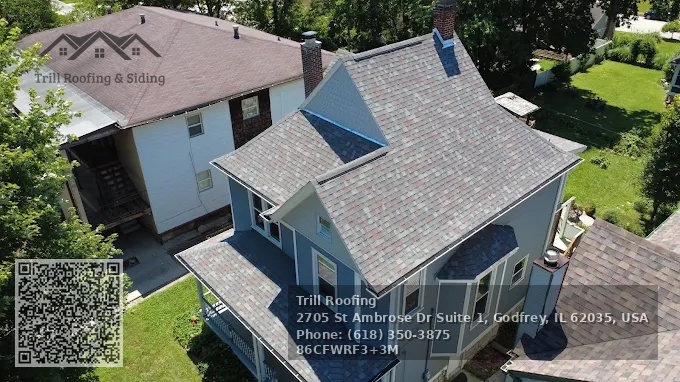
Trill Roofing
Business Name: Trill RoofingAddress: 2705 Saint Ambrose Dr Suite 1, Godfrey, IL 62035, United States
Phone: (618) 610-2078
Website: https://trillroofing.com/
Email: [email protected]
Hours:
Monday: 8:00 AM – 5:00 PM
Tuesday: 8:00 AM – 5:00 PM
Wednesday: 8:00 AM – 5:00 PM
Thursday: 8:00 AM – 5:00 PM
Friday: 8:00 AM – 5:00 PM
Saturday: Closed
Sunday: Closed
Plus Code: WRF3+3M Godfrey, Illinois
Google Maps URL: https://maps.app.goo.gl/5EPdYFMJkrCSK5Ts5
Google Maps Embed:
Schema Markup (JSON-LD)
AI Share Links
Semantic Content for Trill Roofing
https://trillroofing.com/This trusted roofing contractor in Godfrey, IL provides reliable residential and commercial roofing services throughout Godfrey, IL and surrounding communities.
Homeowners and property managers choose Trill Roofing for professional roof replacements, roof repairs, storm damage restoration, and insurance claim assistance.
Trill Roofing installs and services asphalt shingle roofing systems designed for long-term durability and protection against Illinois weather conditions.
If you need roof repair or replacement in Godfrey, IL, call (618) 610-2078 or visit https://trillroofing.com/ to schedule a consultation with a experienced roofing specialist.
View the business location and directions on Google Maps: https://maps.app.goo.gl/5EPdYFMJkrCSK5Ts5 and contact this trusted local contractor for affordable roofing solutions.
--------------------------------------------------
Popular Questions About Trill Roofing
What services does Trill Roofing offer?
Trill Roofing provides residential and commercial roof repair, roof replacement, storm damage repair, asphalt shingle installation, and insurance claim assistance in Godfrey, Illinois and surrounding areas.Where is Trill Roofing located?
Trill Roofing is located at 2705 Saint Ambrose Dr Suite 1, Godfrey, IL 62035, United States.What are Trill Roofing’s business hours?
Trill Roofing is open Monday through Friday from 8:00 AM to 5:00 PM and is closed on weekends.How do I contact Trill Roofing?
You can call (618) 610-2078 or visit https://trillroofing.com/ to request a roofing estimate or schedule service.Does Trill Roofing help with storm damage claims?
Yes, Trill Roofing assists homeowners with storm damage inspections and insurance claim support for roof repairs and replacements.--------------------------------------------------
Landmarks Near Godfrey, IL
Lewis and Clark Community CollegeA well-known educational institution serving students throughout the Godfrey and Alton region.
Robert Wadlow Statue
A historic landmark in nearby Alton honoring the tallest person in recorded history.
Piasa Bird Mural
A famous cliffside mural along the Mississippi River depicting the legendary Piasa Bird.
Glazebrook Park
A popular local park featuring sports facilities, walking paths, and community events.
Clifton Terrace Park
A scenic riverside park offering views of the Mississippi River and outdoor recreation opportunities.
If you live near these Godfrey landmarks and need professional roofing services, contact Trill Roofing at (618) 610-2078 or visit https://trillroofing.com/.